
Let me be honest with you – I’ve seen too many good products fail online because of terrible visuals. While working on e-commerce websites and uploading product images, I noticed a pattern: businesses with amazing products often struggle with poor visual presentation. Their product photos look like they were taken with basic equipment in poor lighting.
That’s when I realized something important: Your product images aren’t just photos – they’re your silent salespeople.

The Problem Most E-commerce Owners Don’t See
Here’s what I’ve observed from building e-commerce websites and working with product imagery: Most business owners think basic product photography is enough. But there’s a massive gap between “good enough” and “conversion-worthy.”
Traditional product photography has limitations:
- Weather dependent – You need perfect lighting conditions
- Limited angles – Physical constraints mean you can’t show every detail
- Expensive reshoots – Want to change the background or lighting? Start over.
- Inventory dependent – Don’t have the product yet? No photos.
I discovered this while developing e-commerce solutions. When businesses need to showcase products before manufacturing or want to display complex technical details, traditional photography often falls short. That’s where 3D renders become invaluable.
Why 3D Product Renders Are Game-Changers
Let me share what I’ve learned from creating hundreds of 3D renders:
1. Perfect Lighting, Every Time
Unlike photography, 3D renders give you complete control over lighting. I can create that golden hour glow at 2 AM if needed. No waiting for perfect weather, no expensive studio setups.
2. Impossible Angles Made Possible
Want to show the internal mechanism of your product? Or a 360-degree view that physically isn’t possible to photograph? 3D renders make it happen.
3. Consistent Brand Aesthetics
Every product in your catalog can have the same lighting, background, and style. This consistency builds trust and makes your brand look professional.
4. Cost-Effective in the Long Run
Yes, the initial setup takes time. But once I create your 3D model, variations are quick and affordable. Want 10 different color options? Done in hours, not days.
Real Potential I’ve Identified
Through my experience building e-commerce websites, I’ve noticed that businesses with better product visuals consistently get more engagement. While I haven’t specifically tracked conversion rates for 3D renders vs. traditional photos yet, the logic is clear: better visuals = more customer confidence = higher sales.
From my 3D modeling work, I know the technical advantages are real. When you can show every angle, every detail, and maintain consistent lighting across all products, you’re providing a better shopping experience.
When Should You Consider 3D Renders?
Based on my 3D design experience and e-commerce development work, 3D renders work best for:
- Complex products with intricate details
- Products not yet manufactured (prototypes, pre-orders)
- Customizable items (different colors, materials, configurations)
- Technical products where internal mechanisms matter
- Luxury items where premium presentation is crucial
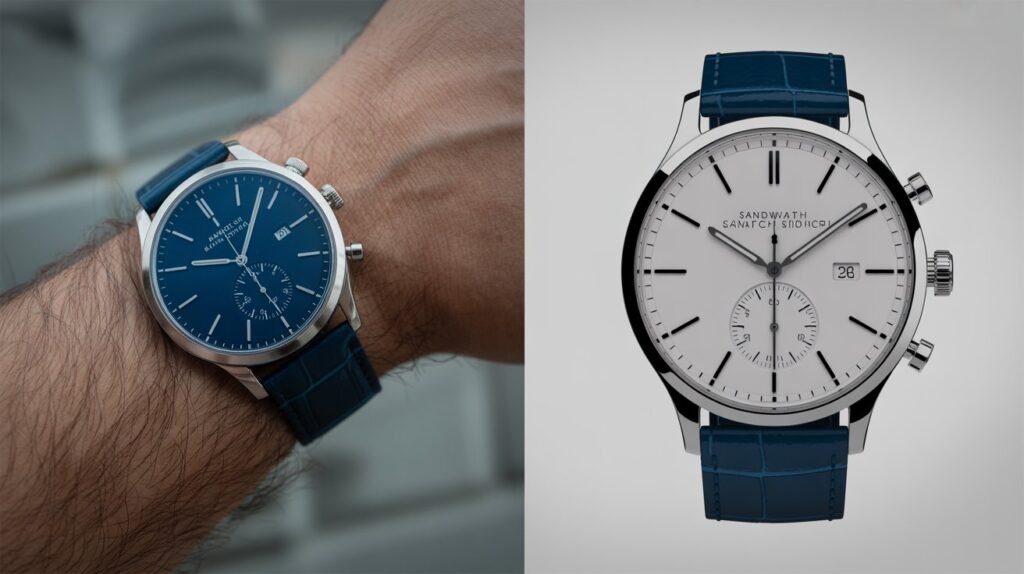
The Process I Follow (So You Know What to Expect)
Having done this many times, here’s my streamlined approach:
- Product Analysis – I study your product, target audience, and brand aesthetics
- 3D Modeling – Creating the accurate digital version of your product
- Material & Lighting Setup – Making it look photorealistic
- Rendering & Post-Processing – Delivering final images optimized for web and print
- Revisions – Fine-tuning until it’s perfect
The entire process typically takes 1-2 weeks, depending on complexity.
A Word of Caution
3D renders aren’t magic. They won’t fix a bad product or poor marketing strategy. But if you have a great product that’s not converting because of visual presentation, this could be your solution.
Also, not every product needs 3D rendering. Simple, flat products often work fine with traditional photography. I always recommend the most cost-effective solution for each client.
What’s Next?
If you’re reading this and thinking, “This sounds exactly like what I need,” here’s what I’d suggest:
- Audit your current product images – Are they consistent? Professional? Compelling?
- Identify your weakest performers – Which products have good reviews but poor sales?
- Consider the math – If better visuals could increase conversions by even 20%, what would that be worth to your business?
I’ve been developing my 3D design skills for 3 years now, and I’ve seen the difference quality visuals make in e-commerce. It’s not just about pretty pictures – it’s about building trust, showing professionalism, and ultimately, helping businesses grow.
Interested in exploring 3D rendering for your products? I’m always happy to discuss whether it’s the right fit for your business. You can reach out through my contact page, and I’ll give you an honest assessment of what would work best for your specific situation.
Remember, the goal isn’t to use the fanciest technology. It’s to present your products in the best possible way to turn visitors into customers.
Want to see examples of my 3D work? Check out my portfolio or book a free 20-minute strategy call to discuss your specific needs. No pressure, just clarity on what would work best for your business.